

Summary
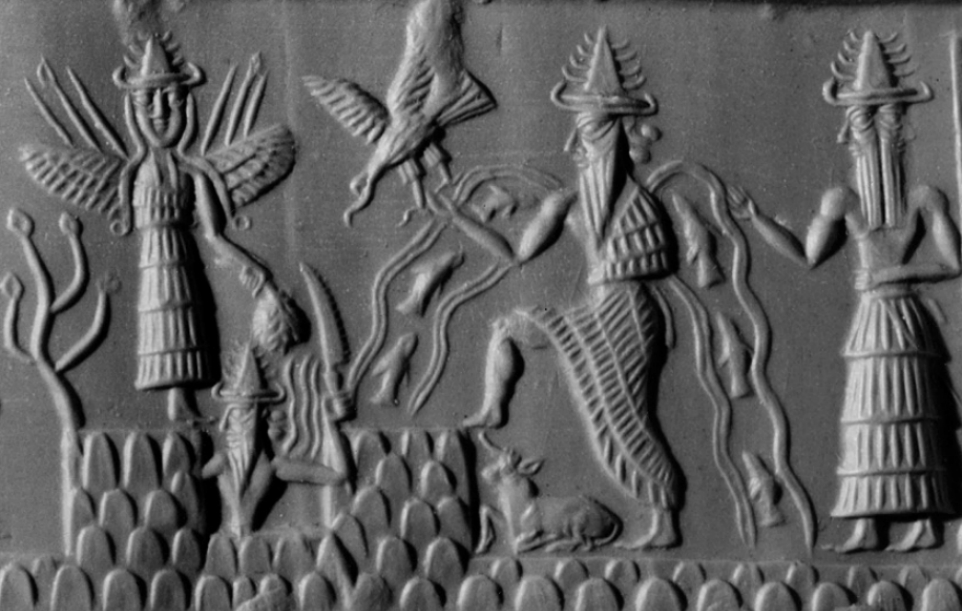
The Anunnaki, a group of deities described in ancient Sumerian texts, are central to the Ancient Astronaut Theory. According to these texts, the Anunnaki were powerful beings who descended from the heavens to Earth, where they played a key role in the creation and guidance of humanity. Proponents of the theory, such as Zecharia Sitchin, argue that the Anunnaki were not gods but extraterrestrial visitors who shared advanced knowledge and technology with early humans. The Sumerian tablets also contain striking parallels to later religious texts, including the Bible, suggesting a shared mythological heritage or even direct influence.
Background
The Sumerian civilization, which emerged in Mesopotamia around 4500 BCE, is one of the oldest known civilizations in human history. Their cuneiform tablets, written in one of the earliest known writing systems, provide detailed accounts of their gods, myths, and cosmology. Among these texts, the Enuma Elish (the Babylonian creation myth) and the Epic of Gilgamesh are particularly significant, as they describe the Anunnaki and their interactions with humanity.
The Theory
The Anunnaki theory revolves around several key claims:
1. The Anunnaki as Extraterrestrial Beings
- Descent from the Heavens: The Sumerian texts describe the Anunnaki as coming from the sky, specifically from a planet called Nibiru, which some believe to be a yet-undiscovered planet in our solar system.
- Creation of Humanity: According to the texts, the Anunnaki genetically engineered humans to serve as laborers, using their own DNA to create a hybrid species. This story is detailed in the Atra-Hasis and Enki and Ninmah tablets.
- Advanced Knowledge: The Anunnaki are said to have taught humans agriculture, mathematics, astronomy, and other sciences, laying the foundation for civilization.
2. Parallels with Later Religious Texts
The Sumerian tablets contain stories that bear striking similarities to later religious texts, including the Bible. These parallels suggest a shared mythological tradition or direct influence. Examples include:
- The Great Flood: The Epic of Gilgamesh includes a flood story remarkably similar to the biblical account of Noah’s Ark. In both stories, a divine being warns a chosen individual to build a boat and save life from a catastrophic flood.
- The Garden of Eden: The Sumerian texts describe a paradise called Dilmun, which some interpret as a precursor to the biblical Garden of Eden. Both stories involve a divine creation of humans and a loss of immortality.
- Tower of Babel: The Sumerian texts describe the construction of massive ziggurats (temple towers), which some link to the biblical story of the Tower of Babel, where humans attempted to build a tower to reach the heavens.
3. Zecharia Sitchin’s Interpretations
Zecharia Sitchin, a prominent proponent of the Ancient Astronaut Theory, popularized the idea that the Anunnaki were extraterrestrial beings. In his book The 12th Planet, Sitchin argued that the Sumerian texts describe real historical events involving advanced alien visitors. He claimed that Nibiru, the Anunnaki’s home planet, follows a long elliptical orbit and periodically passes close to Earth, allowing the Anunnaki to visit and influence humanity.
Evidence
For the Theory
- Ancient Texts: The Sumerian tablets provide detailed accounts of the Anunnaki and their interactions with humanity, which some interpret as evidence of extraterrestrial contact.
- Technological Feats: The advanced knowledge attributed to the Anunnaki, such as astronomy and agriculture, aligns with the sudden rise of civilization in Mesopotamia.
- Mythological Parallels: The similarities between Sumerian myths and later religious texts suggest a shared tradition or direct influence.
Against the Theory
- Lack of Direct Evidence: There is no concrete proof of extraterrestrial contact, and the Sumerian texts can be interpreted as mythological or allegorical.
- Cultural Context: The parallels between Sumerian myths and later texts may reflect the spread of ideas and stories across cultures rather than extraterrestrial influence.
- Scientific Skepticism: Mainstream scholars dismiss Sitchin’s interpretations as speculative and often inaccurate, arguing that he misread or mistranslated the Sumerian texts.
Analysis
The Anunnaki theory challenges conventional views of human history and the origins of religion. While it raises intriguing questions about the possibility of extraterrestrial contact, it remains highly speculative and lacks definitive evidence. The parallels between Sumerian myths and later religious texts highlight the interconnectedness of human cultures and the enduring power of mythological storytelling.
Sources
- The 12th Planet by Zecharia Sitchin
- The Epic of Gilgamesh (translated by Andrew George)
- Enuma Elish: The Babylonian Creation Myth (translated by L.W. King)
- Sumerian Texts Online
Related Theories
- Lost Civilizations: Claims of advanced prehistoric societies like Atlantis or Lemuria.
- Cataclysmic Events: Theories about global disasters that reset human civilization.
- Ancient Astronauts: Broader theories about extraterrestrial influence on ancient cultures.
 The Conspiracy Library
Leave a comment