

Summary
The Tartaria conspiracy theory posits the existence of a once-great, technologically advanced civilization that spanned the globe, only to be systematically erased from history. Proponents of this theory argue that the Tartarian Empire, often associated with the historical region of Tartary in Central Asia, was far more expansive and sophisticated than mainstream history acknowledges. They claim that its architectural marvels, such as grandiose buildings and star forts, were either destroyed, repurposed, or misattributed to other cultures. This article delves into the unverified claims surrounding Tartaria, examining the evidence, counterarguments, and the enduring allure of this mysterious narrative.
Background
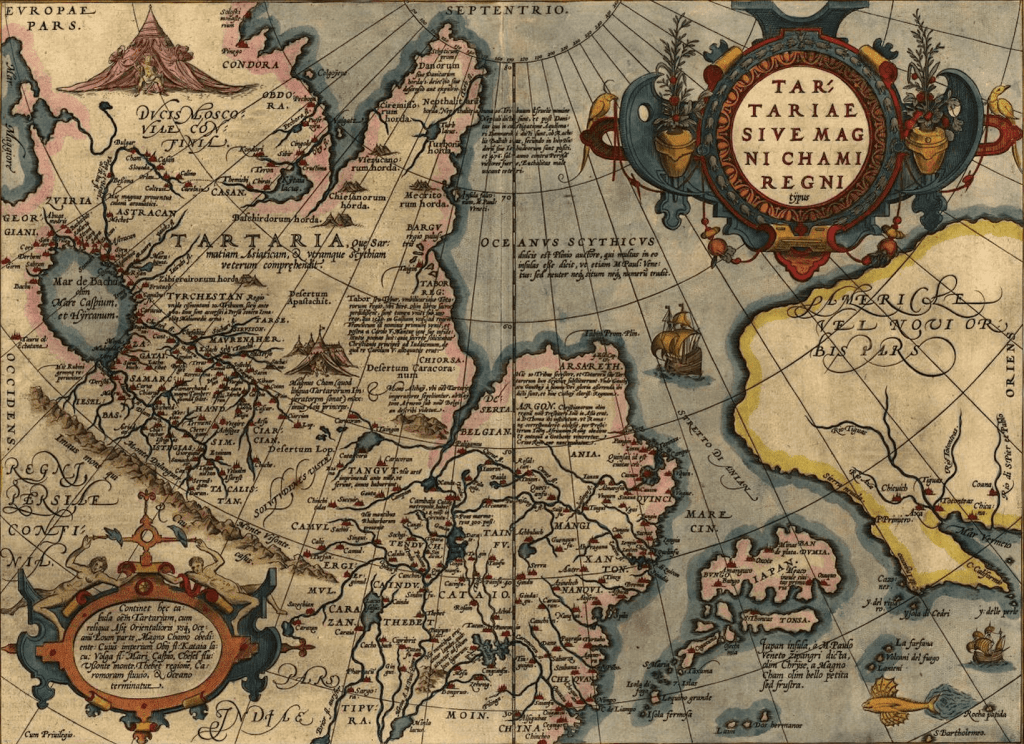
Tartary, or Tartaria, was a term used in European maps and texts from the Middle Ages to the 19th century to describe a vast region encompassing Central Asia, Siberia, and parts of Eastern Europe. Historically, it was depicted as a land of nomadic tribes and sparse settlements. However, conspiracy theorists argue that this portrayal is a deliberate misrepresentation, concealing the existence of a highly advanced civilization with global influence.
The Conspiracy
Unverified claims about Tartaria often focus on three key areas:
1. Global Architectural Legacy
Proponents of the Tartaria theory point to architectural anomalies as evidence of a lost civilization. They argue that grandiose buildings, such as the neoclassical structures found in major cities worldwide, were actually built by the Tartarians. These buildings, often featuring intricate designs and massive scales, are said to be too advanced for the time periods in which they were supposedly constructed. Theorists also highlight the prevalence of star forts—geometrically complex fortifications found across Europe, Asia, and the Americas—as evidence of a unified, global Tartarian architectural style.
2. The Mud Flood Hypothesis
A central pillar of the Tartaria conspiracy is the mud flood hypothesis, which posits that a catastrophic event, such as a massive flood or series of floods, buried entire cities under layers of mud and debris. Theorists claim that many of the world’s oldest buildings were partially submerged, with their lower floors becoming basements or underground levels. They argue that this event was covered up, and the buildings were later repurposed or attributed to other cultures.
3. Historical Erasure and Misattribution
Conspiracy theorists argue that the Tartarian Empire was deliberately erased from history, with its achievements either destroyed or misattributed to other civilizations. They suggest that mainstream historians and institutions have conspired to suppress evidence of Tartaria’s existence, possibly to maintain the dominance of established historical narratives. Some even claim that the Tartarians possessed advanced technologies, such as free energy and wireless communication, which were confiscated or hidden by powerful elites.
Evidence
For the Conspiracy Theory
- Architectural Anomalies: The presence of similar architectural styles and star forts across the globe is cited as evidence of a unified civilization.
- Mud Flood Claims: Photographs of old buildings with partially buried lower floors are used to support the mud flood hypothesis.
- Historical Maps: Old maps depicting Tartaria as a vast, influential region are often referenced as proof of its existence and significance.
Against the Conspiracy Theory
- Lack of Archaeological Evidence: There is no concrete archaeological evidence to support the existence of a global Tartarian civilization.
- Historical Context: The term “Tartary” was a catch-all label used by Europeans to describe regions they knew little about, rather than a reference to a specific empire.
- Misinterpretation of Architecture: Many of the buildings cited as evidence of Tartarian influence were constructed during well-documented historical periods, such as the Renaissance and the Industrial Revolution.
Analysis
The Tartaria conspiracy theory taps into a deep fascination with lost civilizations and hidden histories. While the claims are intriguing, they often rely on speculative interpretations of historical and architectural evidence. The theory’s popularity may stem from a desire to challenge mainstream narratives and uncover forgotten truths about humanity’s past. However, the lack of verifiable evidence and the reliance on anecdotal observations make it difficult to accept Tartaria as a historical reality.
Sources
- Old Maps of Tartary: Historical maps from the 16th to 19th centuries depicting Tartaria as a vast region.
- Architectural Studies: Analyses of neoclassical buildings and star forts, such as those found in The Architecture of Forts and Castles by Quentin Hughes (1991).
- Mud Flood Claims: Online forums and alternative history websites discussing the mud flood hypothesis, including Tartaria Britannica.
Related Theories
- The Great Reset: Claims that historical events, such as wars and natural disasters, are used to erase and rewrite history.
- Ancient Advanced Civilizations: Theories about lost civilizations, such as Atlantis or Lemuria, that possessed advanced technologies.
- Historical Cover-Ups: Allegations that powerful institutions suppress evidence of alternative histories to maintain control over public knowledge.
 The Conspiracy Library
Leave a comment