

Summary
The Spars Pandemic document, published by Johns Hopkins University in 2017, presents a fictional scenario of a global pandemic striking the world in the near future. Some critics argue that the document eerily resembles the events surrounding the COVID-19 pandemic, raising questions about whether it was merely a well-timed prediction or part of a larger, more coordinated plan. By analyzing the striking similarities between the two events, this paper aims to determine if the Spars Pandemic was simply an accurate foresight or if it points to a deeper, more sinister agenda regarding global health crises and control mechanisms.
Background
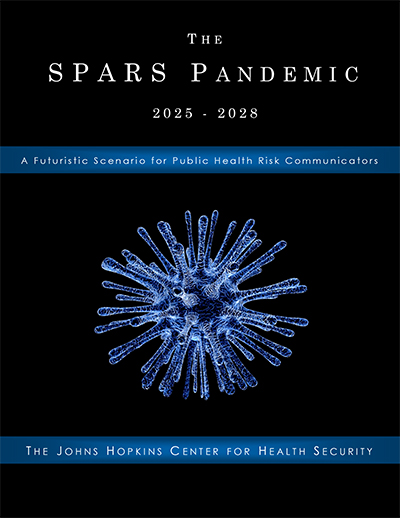
The Spars Pandemic document, formally titled “The SPARS Pandemic 2025-2028: A Futuristic Scenario for Public Health Risk Communication”, was developed by Johns Hopkins Center for Health Security. The document outlines a hypothetical scenario in which a novel virus—named SARS-CoV-2 (coincidentally similar to the virus responsible for the real-world COVID-19) emerges and spreads globally, prompting widespread public health crises, government responses, and vaccine rollouts. In many ways, the document mirrors the events of the COVID-19 pandemic almost precisely, which has led many to question whether the pandemic was a carefully planned event or simply a predicted scenario drawn from established public health trends.
This analysis compares the events described in the Spars document to the actual COVID-19 pandemic, evaluating whether the content was simply an accurate foresight or indicative of a deeper, orchestrated plan. The notion that these two events are connected raises critical questions about the potential manipulation of public health for broader political and economic agendas.
The Conspiracy
1. Striking Similarities Between the Spars Pandemic and COVID-19
At the heart of the debate is the overwhelming number of parallels between the Spars Pandemic scenario and the COVID-19 pandemic. The following key aspects of the Spars document echo the events of COVID-19:
- The Origin of the Virus: In the Spars Pandemic scenario, a novel virus originating from a zoonotic source triggers a pandemic. Similarly, the COVID-19 pandemic was reported to have originated from a zoonotic source, specifically bats, in Wuhan, China.
- Vaccine Rollout: Both scenarios feature the rapid development of vaccines aimed at controlling the spread of the virus. In both cases, governments and pharmaceutical companies were involved in mass vaccination campaigns, with varying degrees of success and controversy.
- Public Misinformation and Trust Issues: In the Spars Pandemic, the document describes public resistance to the vaccine and the spread of misinformation, which mirrors the challenges faced during the COVID-19 pandemic regarding vaccine hesitancy and conspiracy theories.
- Government Control and Surveillance: Both scenarios suggest heightened government control and surveillance, with Spars outlining stringent measures to track individuals and enforce public health policies, which closely aligns with the emergency powers enacted during COVID-19, such as lockdowns, contact tracing, and vaccine mandates.
2. Was the Spars Pandemic a Prediction or a Blueprint?
Some conspiracy theorists argue that the Spars Pandemic document was more than just a prediction—it was a blueprint or a plan that outlined the precise sequence of events that would unfold during a pandemic. By analyzing the document’s structure and content, they suggest that the similarities between the simulated pandemic and the actual COVID-19 pandemic are too striking to be coincidental. The alignment of the document’s timeline with real-world events (e.g., the rapid rollout of vaccines, global lockdowns, and widespread public distrust) leads some to question whether the Spars Pandemic was intended to prepare global leaders and organizations for a future crisis or whether it served as a framework for orchestrating and controlling a pandemic to achieve specific global objectives.
3. The Role of Johns Hopkins University
Johns Hopkins University has been at the forefront of global health research and public health crises, including COVID-19. The Johns Hopkins Center for Health Security, responsible for the Spars Pandemic document, played a key role in tracking the COVID-19 pandemic and advising governments and health organizations around the world. This dual involvement has led to further speculation about whether the institution’s research was part of a larger strategy to influence global health outcomes. The involvement of prominent global figures, governments, and institutions in both the Spars Pandemic simulation and the COVID-19 pandemic raises questions about whether such scenarios are predictive or premeditated.
4. Misinformation, Trust, and Control
A central theme in both the Spars Pandemic document and the COVID-19 pandemic is the management of misinformation and public trust. The Spars Pandemic scenario includes government efforts to manage public perception and misinformation surrounding the pandemic, which closely mirrors real-world efforts to control the narrative around COVID-19. Both scenarios highlight the role of social media and other communication channels in shaping public opinion, often leading to conflicting messages, confusion, and distrust.
5. Global Economic Impact and Reset
One significant component of the Spars Pandemic scenario involves the economic aftermath of the pandemic, including the imposition of austerity measures, economic recovery plans, and the consolidation of power within global financial institutions. These elements mirror the economic reset that some theorists argue occurred during COVID-19, where global economies were forced into lockdowns, leading to massive shifts in labor markets, government spending, and corporate power dynamics.
Evidence and Analysis
For the Conspiracy Theory
- Documentary Evidence: The Spars Pandemic document itself serves as evidence of a pre-ordained scenario that closely parallels the COVID-19 pandemic, especially in its predicted timelines and governmental responses.
- Historical Precedents: The history of public health simulations, such as the Event 201 exercise held by Johns Hopkins University in partnership with the World Economic Forum and Bill & Melinda Gates Foundation, raises further questions about the coordination of such pandemic simulations and their possible role in shaping real-world events.
- Whistleblower Testimonies: Some whistleblowers within governmental and pharmaceutical organizations have raised concerns about the lack of transparency in pandemic preparedness plans and the potential for such simulations to be used to influence public health policies and behaviors.
Against the Conspiracy Theory
- Preparedness vs. Prediction: Critics argue that the Spars Pandemic document was simply an exercise in pandemic preparedness, a tool used to help public health experts plan for potential outbreaks. They point out that the similarities between the document and the COVID-19 pandemic are not evidence of a coordinated plan but rather the result of a predictable pattern of global health responses to infectious diseases.
- Scientific Scrutiny: The involvement of Johns Hopkins University and other scientific institutions in pandemic simulations does not necessarily indicate a hidden agenda, as these exercises are common in public health research. They argue that these activities are designed to mitigate future risks, not to orchestrate crises.
Conclusion
While the Spars Pandemic document presents a chillingly accurate scenario of a global health crisis that mirrors the events surrounding the COVID-19 pandemic, it remains unclear whether it is a mere coincidence, a well-crafted predictive tool, or part of a larger, more sinister plan. The parallels between the two events raise important questions about the role of global institutions in shaping the course of pandemics and controlling public perception. Regardless of its origins, the Spars Pandemic serves as a stark reminder of the potential power that public health authorities and governments wield in managing global crises and shaping the future of human society.
Sources
- Spars Pandemic Simulation: Johns Hopkins Center for Health Security
- Event 201 Pandemic Simulation: Johns Hopkins Bloomberg School of Public Health
- COVID-19 Vaccine Hesitancy Among Black Women in the US: JAMA Network
- Global Health and Economic Impact: World Health Organization
 The Conspiracy Library
Leave a comment